The complete side-dish guide
How to Make Mashed Potatoes: The Ultimate Creamy Mashed Potatoes Guide
There's a reason mashed potatoes show up on more dinner tables than almost any other side dish. They are cheap, comforting, and when made right, disappear from the bowl faster than anything else on the table.
The good news: mashed potatoes aren't hard to make. They are forgiving, quick, and once you understand the handful of things that actually matter — which potatoes to pick, how to boil them, and what to add and when — you will never need to second-guess a recipe card again.
What Makes the Best Mashed Potatoes
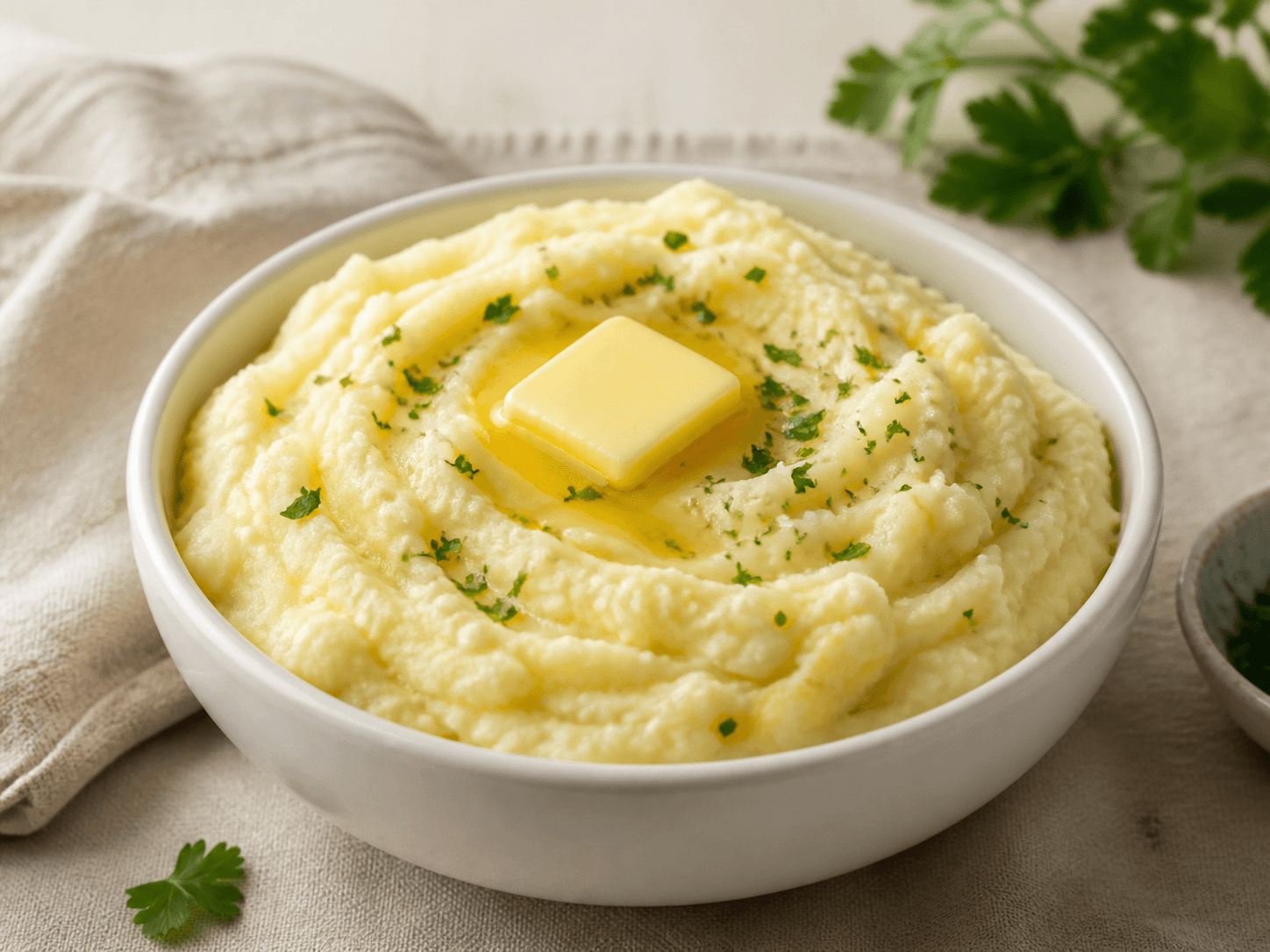
Great mashed potatoes come down to three things: starchy potatoes, the right amount of liquid fat, and not overworking the mash once it's smooth. Skip any one of those, and you'll end up with something either gluey, watery, or flavorless, even if you followed a recipe to the letter.
We'll walk through each of those, then move into the full step-by-step recipe below.
Best Potatoes for Mashed Potatoes
This is the single biggest decision that affects your final texture, and most people never think about it.
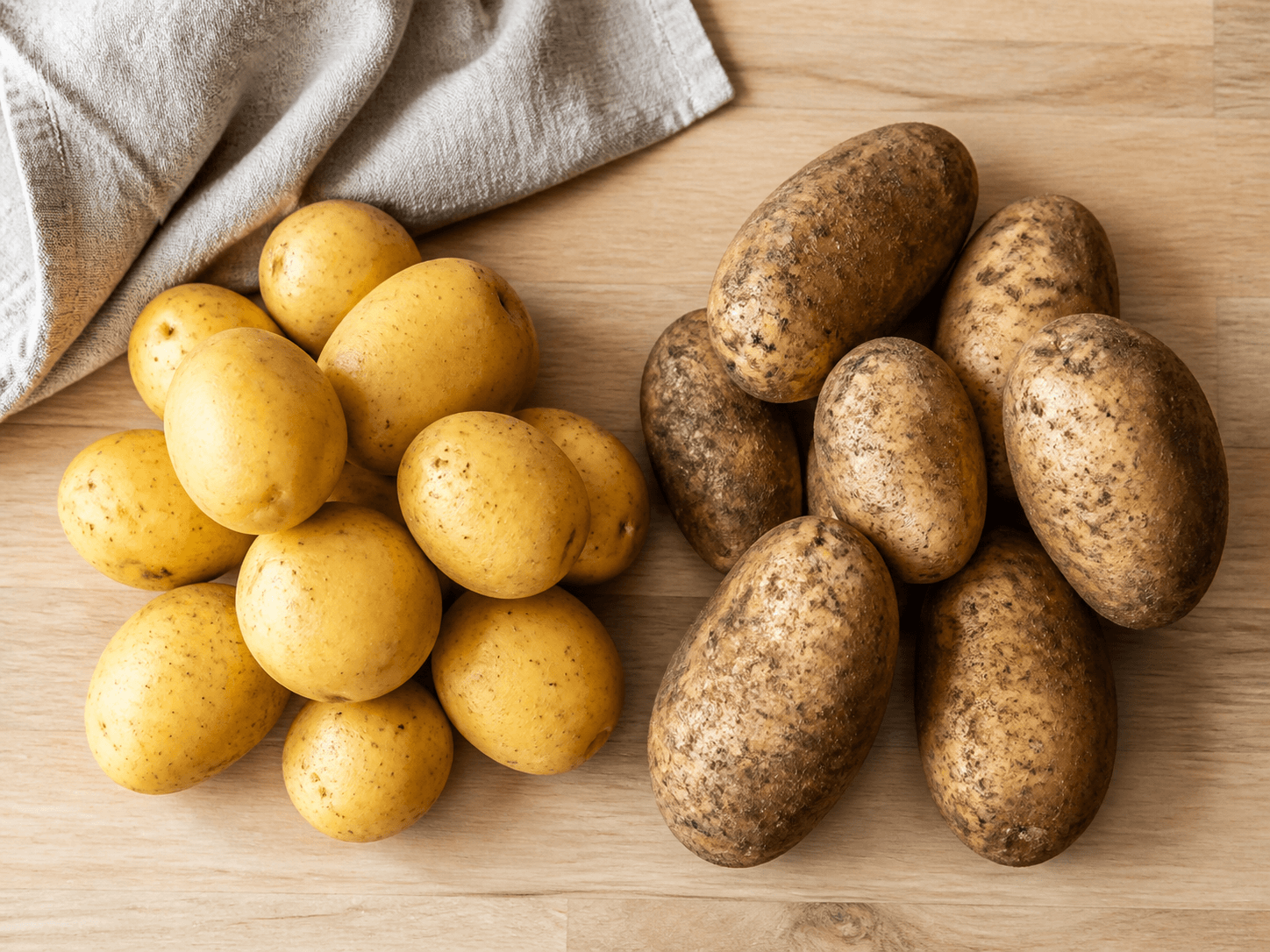
Russet potatoes are the classic choice for a reason. They are high in starch and low in moisture, which means they break down into a light, fluffy mash rather than a dense, wet one. If you want the traditional, cloud-like texture, russets are your potato of choice.
Yukon Gold potatoes are the other popular option, and honestly, they might be even better for most home cooks. They have a naturally buttery flavor and a slightly waxier texture, which makes them more forgiving — they are less likely to become gluey when overworked, and they don't need as much added butter to taste rich. If you've ever had mashed potatoes at a restaurant that tasted noticeably better than homemade, there's a decent chance they were made with Yukon Golds.
Many cooks mix the two — russets for fluffiness, Yukon Golds for flavor — and it works well if you want the best of both.
What you'll want to avoid: waxy potatoes like red bliss or new potatoes. They hold their shape too well, which is great for potato salad and terrible for mashing. You'll end up working them so hard to get them smooth that you release too much starch, which is exactly how you get gluey mashed potatoes.
How to Make Mashed Potatoes (Step-by-Step)
Here's the full method, start to finish.
Ingredients (Serves 4)
- 2 lbs Russet or Yukon Gold potatoes, peeled and cut into roughly 1.5-inch chunks
- 1/2 cup whole milk or heavy cream, warmed
- 4–6 tablespoons unsalted butter, softened
- Salt, to taste (start with 1 teaspoon in the boiling water, then adjust after mashing)
- Freshly cracked black pepper
Instructions
- Cut the potatoes evenly. Aim for chunks around the same size, roughly 1.5 inches, so they cook at the same rate. Uneven pieces mean some potatoes turn to mush while others stay firm, and that unevenness carries through to the final texture no matter how much you mash.
- Start them in cold water. Place the potato chunks in a pot, cover with cold water, then bring everything up to a boil together. If you drop potatoes into water that's already boiling, the outside cooks faster than the inside, and you end up with a mash that's part paste, part chalky center.
- Salt the water generously. This is your one real chance to season the potatoes from the inside out. A well-salted pot (it should taste like the sea) makes a noticeable difference in the final flavor.
- Boil until fork-tender. Once the water is boiling, drop it to a simmer and cook for 15–20 minutes. You'll know the potatoes are ready when a fork slides in with almost no resistance — no crunch, no firm center.
- Drain thoroughly, then let them steam-dry for a minute. Excess water is the enemy of good texture — it dilutes the flavor and makes the mash loose, no matter how much butter you add. After draining, let the potatoes sit in the dry pot for 60 seconds off the heat. You'll actually see the steam carry the extra moisture away.
- Mash while hot. Potatoes firm up as they cool, and mashing cold potatoes takes more effort, which means more starch release and gluey mash. Get to it while they're still steaming.
- Add warm butter and milk, not cold. Cold dairy shocks the potatoes and can make them seize up slightly. Warm the milk and let the butter soften first — it incorporates more smoothly and keeps the texture silky rather than tight.
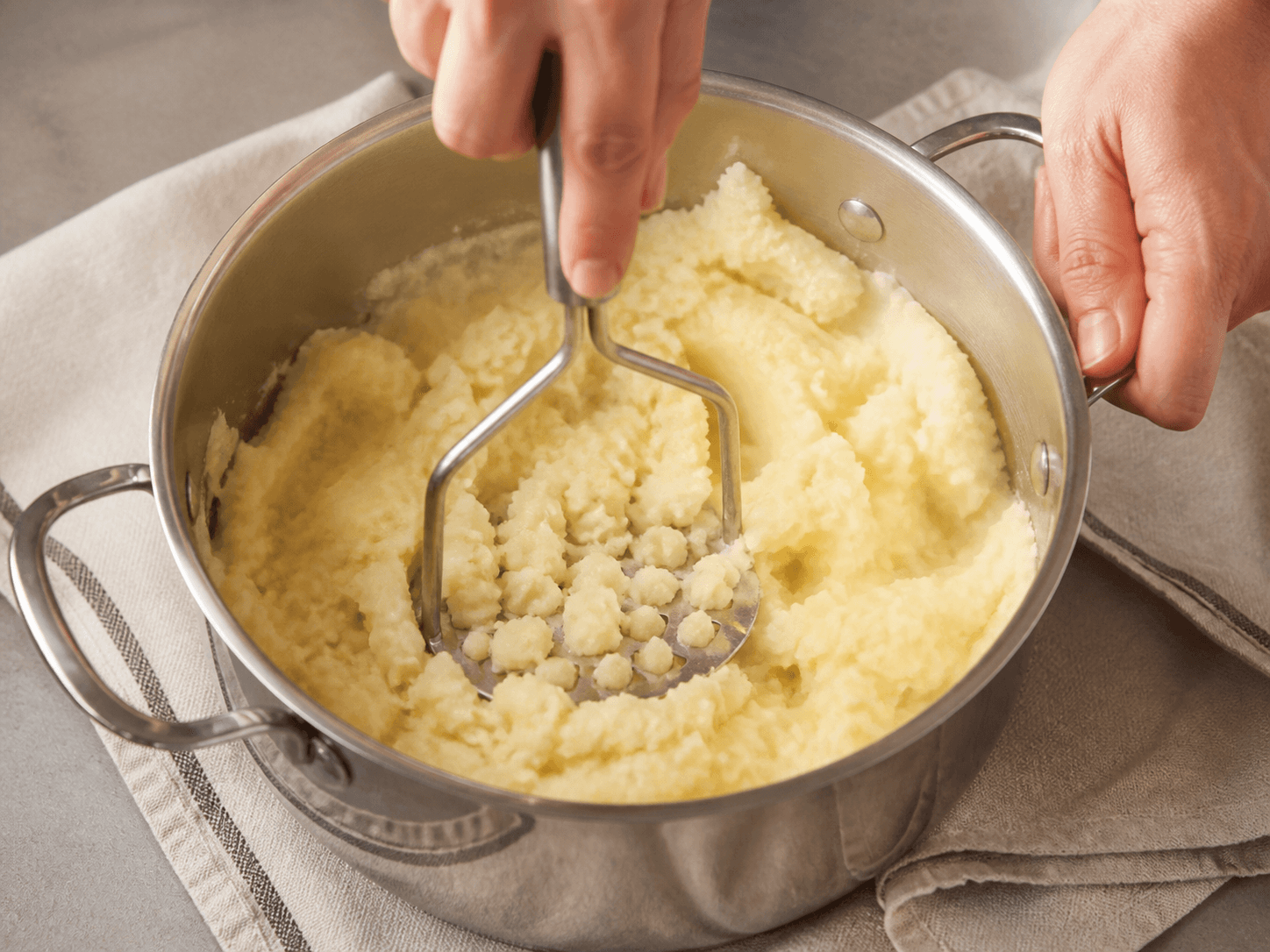
- Fold gently, don't overwork it. Use a potato masher or a ricer rather than a stand mixer or food processor, since those break down the starch cells too aggressively and turn the mash into paste almost instantly. Mix just until the lumps you don't want are gone. A few small lumps are fine; a mixer full of glue is not.
- Taste and adjust. Add salt and pepper at the end, since the potatoes' saltiness will have changed once mixed with the dairy and butter.
How Long to Boil Potatoes for Mashed Potatoes
As a general rule, boil potatoes for 15–20 minutes at a simmer, starting from cold water, for chunks around 1.5 inches. Smaller pieces cook faster, closer to 12 minutes, while larger chunks can take closer to 25. The size of your dice matters more than the clock, so always test with a fork rather than going purely by time.
Creamy Mashed Potatoes: Tips for Extra Smooth Texture
If your mashed potatoes keep coming out either too stiff or too loose, it's almost always one of these:
- Warm your dairy. Cold milk or cream tightens the starch and makes the potatoes harder to smooth out.
- Use a ricer for restaurant-level texture. A potato ricer pushes the potatoes through small holes, breaking them down evenly without overworking them.
- Add liquid gradually. Pour in a little at a time and stir between additions. It's much easier to add more than to fix mashed potatoes that have gone too thin.
- Butter before milk. Coating the potatoes in fat first helps prevent them from absorbing too much liquid and turning watery.
- Don't rush the draining step. Excess water is the most common reason creamy mashed potatoes turn out loose instead of thick and rich.
Mashed Potato Variations
Once you've got the base method down, it's easy to build on it.
Garlic Mashed Potatoes
Roast a whole head of garlic (cut the top off, drizzle with olive oil, wrap in foil, and roast at 400°F for 35–40 minutes), then squeeze the softened cloves straight into the potatoes before mashing. Roasting mellows the garlic into something sweet and nutty rather than sharp, which works better here than raw or sautéed garlic.
Cauliflower Mashed Potatoes
For a lighter, lower-carb version, swap half the potatoes for steamed cauliflower florets. Cauliflower has more water content, so drain it especially well and go easier on added milk, since you'll likely need less liquid than a full-potato batch.
Mashed Sweet Potatoes
Sweet potatoes mash beautifully on their own using the same boil-and-mash method, though they're naturally wetter, so cut the added milk roughly in half. A little cinnamon or a spoon of maple syrup brings out their natural sweetness without turning the dish into dessert.
Vegan Mashed Potatoes
Swap the butter for a good olive oil or plant-based butter, and use unsweetened oat or soy milk in place of dairy. Both have a neutral enough flavor that they won't compete with the potatoes. Oat milk in particular tends to give the creamiest result among dairy-free options.
Instant Pot Mashed Potatoes
If you're short on time, an Instant Pot cuts the cooking step down significantly. Add 2 lbs of cubed potatoes, 1 cup of water, and a teaspoon of salt to the pot, then cook on high pressure for 8 minutes with a quick release. Drain any excess water, then mash directly in the pot using the same warm butter and milk method as the stovetop version. It's a genuinely reliable shortcut on a busy weeknight without sacrificing texture.
Sour Cream Mashed Potatoes
Stirring in 1/4 to 1/2 cup of sour cream along with the butter adds a subtle tang that balances out the richness, and it's a popular twist for holiday tables. Add it at the same stage as the butter, and taste as you go since sour cream also brings extra saltiness and moisture into the mix.
What to Serve With Mashed Potatoes
Mashed potatoes are one of the most versatile sides there is, which is exactly why they show up at everything from Tuesday dinner to holiday tables.
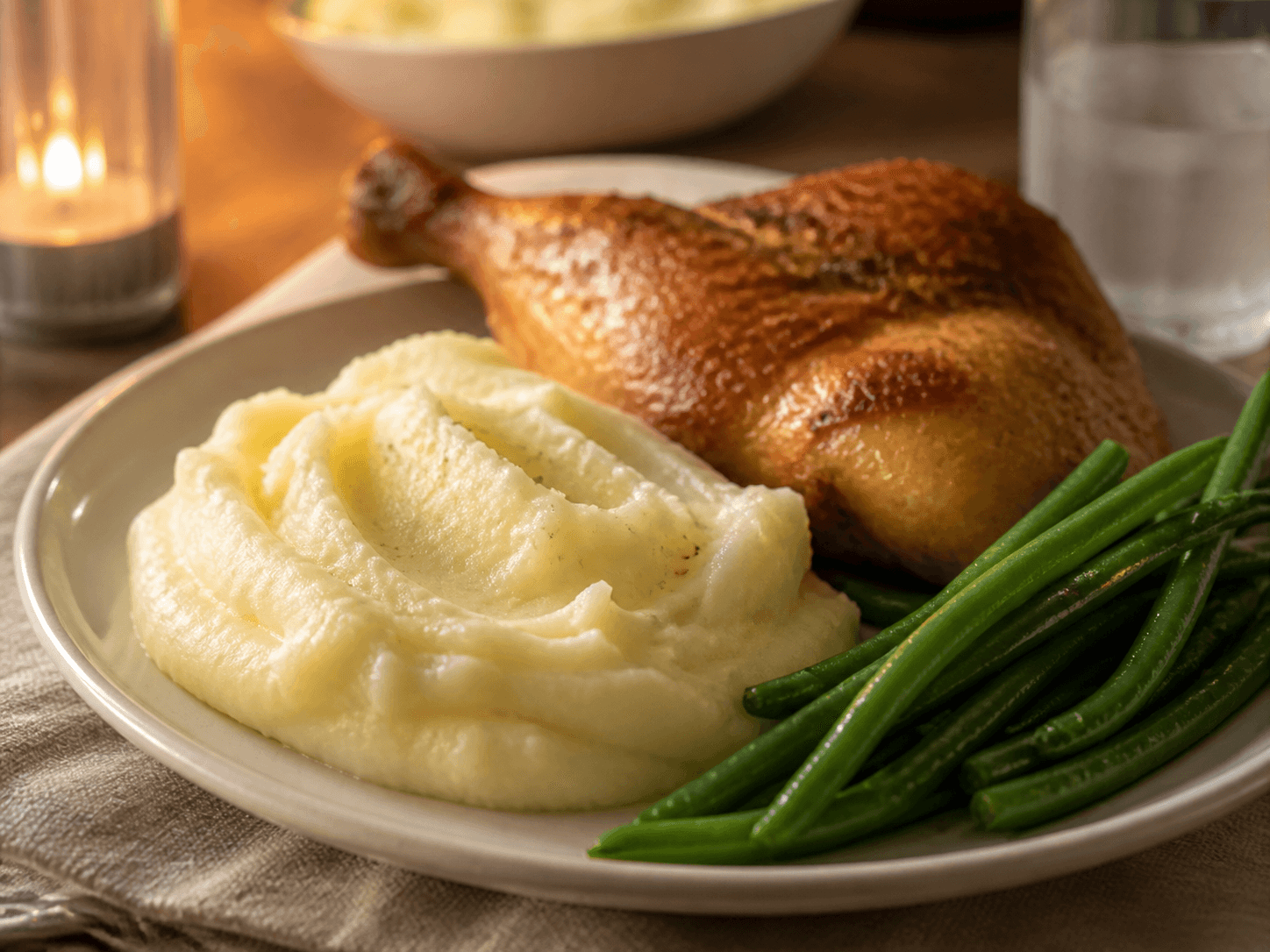
- Roasted or grilled meats — chicken, steak, pork chops, meatloaf — the potatoes soak up pan juices and gravy better than almost any other side.
- Braises and stews — beef stew, pot roast, or short ribs spooned right over the top.
- Gravy, of course — a well-made pan gravy or mushroom gravy turns simple mashed potatoes into the best part of the plate.
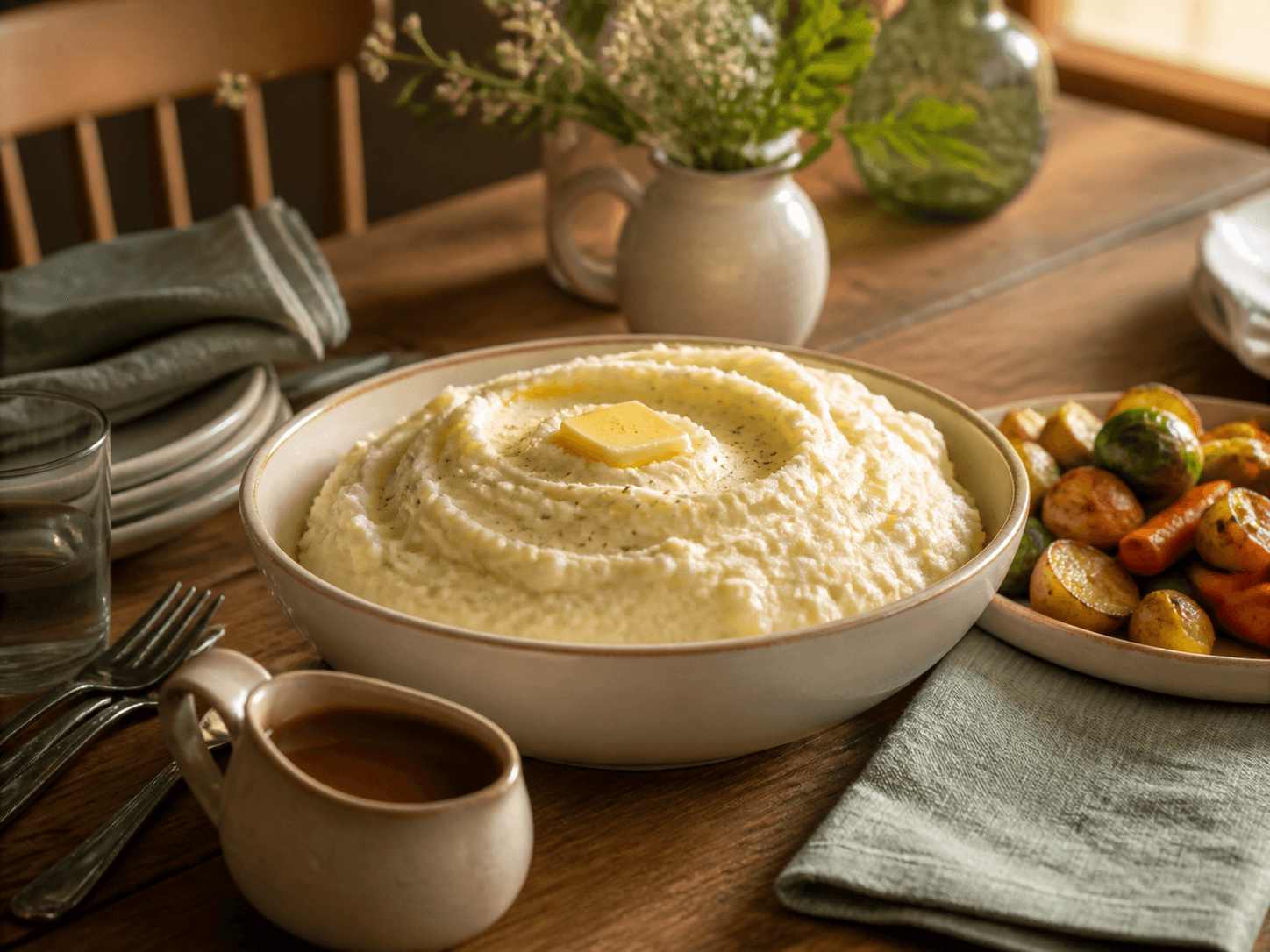
- Roasted vegetables — green beans, glazed carrots, or roasted Brussels sprouts round out the plate with texture and color.
- Sausages and comfort classics — bangers and mash, shepherd's pie, or a simple fried egg on top for breakfast leftovers.
Storing & Reheating Leftover Mashed Potatoes
Mashed potatoes keep well in the fridge for 3–4 days in an airtight container. To reheat, add a splash of milk before microwaving or warming on the stovetop over low heat, since the potatoes will have tightened up in the fridge, and a little extra liquid brings the texture back. Stir often so they heat evenly instead of drying out at the edges.
They also freeze surprisingly well for up to two months, especially when they contain a good amount of butter and cream. Fat helps prevent the icy, grainy texture that plain boiled potatoes tend to get in the freezer.
Mashed Potato FAQs
Can I make mashed potatoes ahead of time?
Yes. Make them up to a day in advance, store covered in the fridge, and reheat gently with a splash of milk. For the smoothest texture, avoid reheating more than once.
Why did my mashed potatoes turn out gummy?
Almost always overmixing, using the wrong potato variety, or using a food processor. Stick to a masher or ricer, and stop as soon as the mixture is smooth.
What's the best liquid to use — milk or cream?
Both work well. Milk gives a lighter result, while cream gives a richer one. A mix of the two is a good middle ground if you want richness without heaviness.
Ready to Find Your Next Recipe?
Mashed potatoes are one of those dishes that's simple in theory but genuinely better once you understand the why behind each step. Once you've nailed this one, explore the rest of our mashed potato recipe collection, or let our food discovery tool suggest what to pair it with tonight based on what you're already making.