Meal guide · Updated July 22, 2026
A Simple Weeknight Dinner Rotation You Can Reuse Every Week
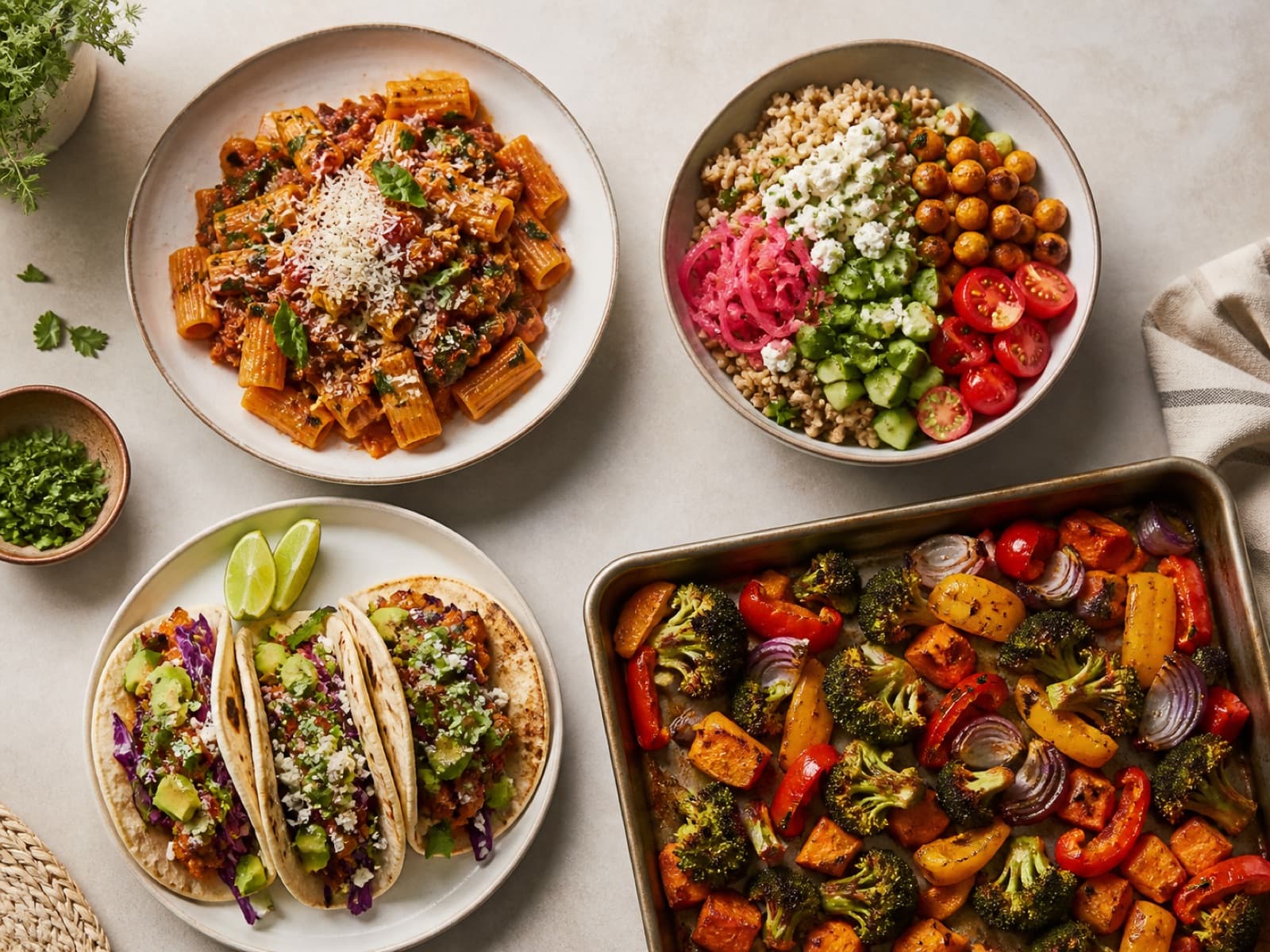
The mental load of what is for dinner usually is not a lack of recipes — it is deciding from scratch every night. A weeknight dinner rotation assigns a loose category or theme to each day, such as meatless, sheet-pan, or pasta night, so you choose within a smaller category instead of unlimited options. You still get variety, but the daily decision gets easier.
Why a Rotation Works Better Than Planning From Scratch
Decision fatigue hits hardest at the end of a long day, which is exactly when you are trying to figure out dinner. A rotation narrows tonight's question from what should I make to which meatless or quick dish do I feel like tonight. It also makes grocery shopping more predictable because you restock a familiar handful of categories.
A Sample Weekly Rotation
- Meatless Monday — a bean, lentil, or vegetable-based main.
- Taco Tuesday — anything in a tortilla, from tacos to quesadillas.
- Sheet-Pan Wednesday — one pan, one protein, and roasted vegetables.
- Breakfast-for-Dinner Thursday — eggs, pancakes, or a breakfast skillet for a low-energy night.
- Family Favorite Friday — the dish that gets the least resistance at the table.
- Flexible weekend nights — leftovers, takeout, or something that takes more time.
Building Your Own List of Go-To Meals
Once you have themes, build a short list of three or four meals per category that your household likes and you can make without much thought. The rotation is sustainable because you pick from meals you already know work instead of inventing a new sheet-pan dinner every week. Swap meals in and out as you find favorites or get tired of old ones.
If one night is consistently your lowest-energy night, assign it the simplest category and keep easy dinner ideas for zero-energy nights as backup options.
Grocery Shopping Around a Rotation
Once categories are set, grocery shopping becomes easier because you restock core ingredients rather than shopping from a different recipe every time. A running list of staples — tortillas and salsa for taco night, or protein and frozen vegetables for sheet-pan night — turns the weekly trip into a routine.
Keeping the Rotation From Getting Stale
- Rotate the specific recipe within each category every few weeks while keeping the category itself.
- Try one new recipe a month in a category you already understand.
- Revisit the system every season. Heavy slow-cooked meals may need lighter swaps in summer.
- Let go of a category that is not working. Replace meatless Monday if it keeps getting skipped.
Making the System Easier to Stick To
A rotation works when it is easy to see and follow. Write it somewhere visible, such as a whiteboard, shared notes app, or printed sheet on the fridge. If you build it alongside meal prep and family dinner routines, the rotation decides what you are making while prep decides how much work gets done ahead of time.
FAQs
How many meals should be in a dinner rotation?
Most households do well with 10–20 total meals across all categories — enough to avoid repetition within a month without making the list hard to remember or plan.
What if my family doesn't like themed nights like Taco Tuesday?
Themes are only a planning tool. Use broader categories like quick, slow-cooked, and meatless instead of naming specific days, as long as they narrow the daily decision.
How often should I update my dinner rotation?
Revisit it every season or whenever a particular meal keeps getting skipped. That keeps the rotation useful without requiring a constant overhaul.
Does a dinner rotation save money?
It often does because shopping for a smaller, repeating ingredient list tends to reduce food waste and the temptation to order takeout on an unplanned night.
Can a dinner rotation work for someone cooking for just themselves?
Yes. The same logic applies at a smaller scale and can be simpler because there are fewer preferences to account for.
What's the difference between a dinner rotation and meal prep?
A rotation decides what you are eating on a given night, while meal prep means doing some cooking ahead of time. They work well together, but a rotation does not require advance cooking.
Conclusion
A weeknight dinner rotation does not remove decisions — it shrinks them to a smaller, easier choice within a category you already understand. Still stuck on a night the rotation does not cover? Try WhatToEatNow for a suggestion based on your mood and time.
Pick a mood and get one meal suggestion now.