Meal guide · Updated July 22, 2026
Easy Camping Meal Ideas (No Full Kitchen Required)
Camping dinners work best when they are planned around the equipment you will actually have, not what you would cook at home. Foil packet meals, one-pot camp stove dinners, campfire grilling, and no-cook assembly meals cover almost every scenario, whether you are car camping with a cooler or backpacking with a small stove.
No-Cook Camping Meals
For the simplest nights, sandwiches, wraps, and pre-made salads travel well in a cooler. Tortilla wraps with deli meat, cheese, and vegetables hold up better than bread-based sandwiches over a day or two. Hummus with vegetables and pita, or a grain salad made ahead at home, are also solid no-cook options.
Foil Packet Dinners
A foil packet with protein, vegetables, and seasoning wrapped tightly in heavy-duty foil cooks directly in campfire coals or on a grill grate with no pots or pans. Chicken or sausage with potatoes and vegetables is reliable because everything cooks through in about the same amount of time.
One-Pot Camp Stove Meals
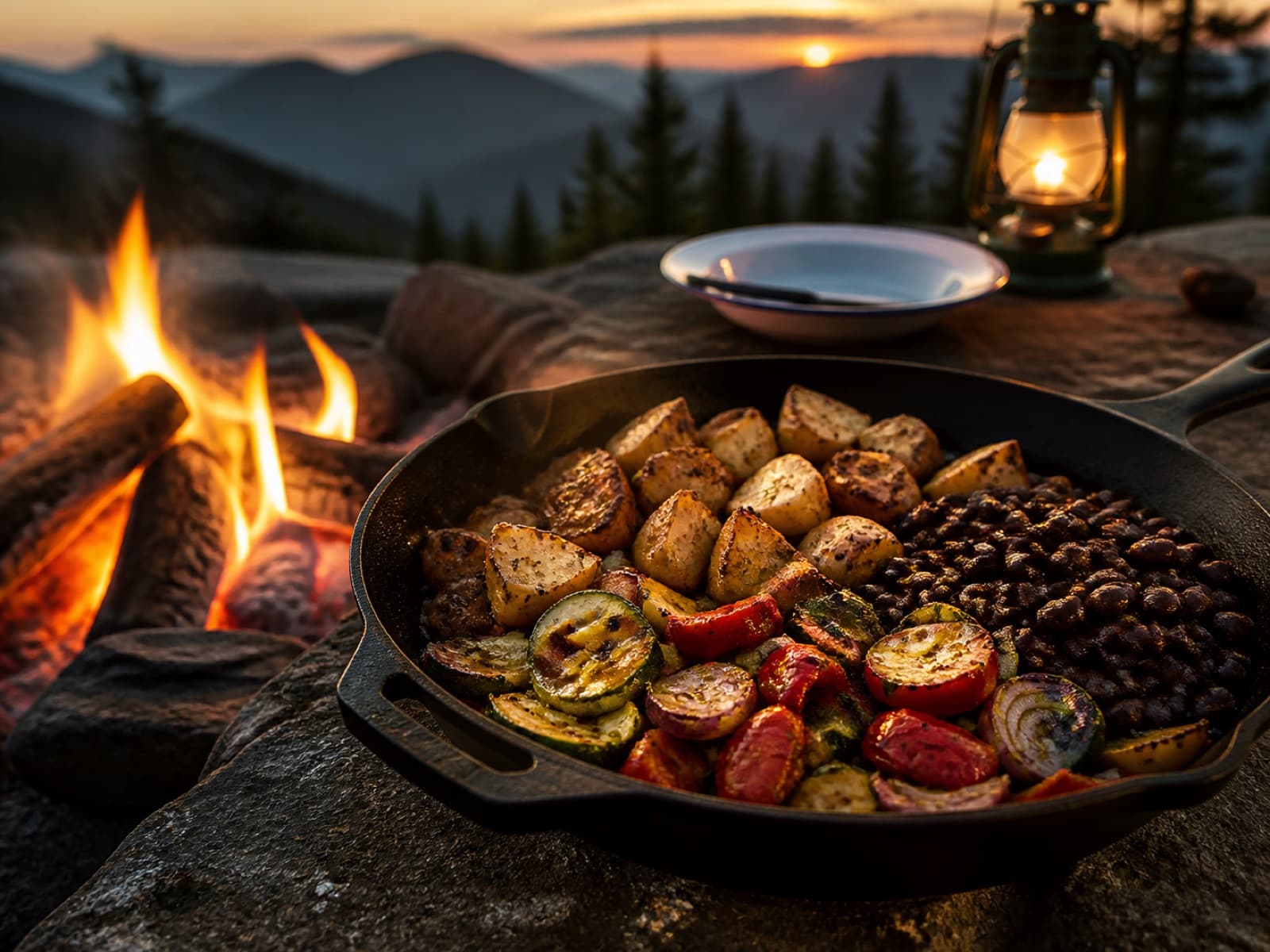
If you bring a camp stove, a one-pot meal keeps cleanup simple. Pasta with jarred sauce and canned protein, chili made from canned beans and pre-cooked meat, or instant rice and vegetable skillet all come together in one pan with minimal prep.
Campfire Grilling
With a grate over the fire, burgers, sausages, kebabs, and corn translate directly from a home grill to a campsite. Pre-marinating protein at home and packing it in a sealed container saves prep time once you are set up.
Food Safety Tips for Camping Meals
Keeping raw meat properly chilled matters even more when you rely on a cooler instead of a fridge. Pack raw meat separately from ready-to-eat food, keep the cooler cold, and cook meat to a safe internal temperature. The USDA food-safety guidance for camping is useful to review before a longer trip.
What to Pack for Easier Camping Meals
- Pre-marinated or pre-seasoned proteins prepared at home and stored in sealed bags.
- Heavy-duty foil for packet meals.
- A cooler with ice packs, with raw meat on the bottom to avoid drips onto other food.
- Canned or shelf-stable proteins such as beans and tuna as a backup.
- A simple spice kit — salt, pepper, and one or two seasoning blends cover most meals.
A Sample 3-Day Camping Meal Plan
Plan meals in the order your cooler will be used so the most perishable food is eaten first. A rough plan is foil packet chicken and vegetables on day one, one-pot pasta or chili using shelf-stable ingredients on day two, and wraps or a no-cook salad with what remains on day three.
Cooking for a Group vs. Solo or Backpacking Trips
Car camping with a group allows more variety and heavier gear, such as a full cooler, two-burner stove, or Dutch oven. Solo or backpacking trips call for lightweight food, dehydrated meals that need boiling water, or one-pot dinners made with ingredients that do not need refrigeration.
FAQs
What's the easiest meal to cook while camping?
A foil packet with protein, vegetables, and seasoning requires no pots or pans and minimal cleanup when cooked on coals or a grill grate.
What can I eat camping without cooking at all?
Wraps, sandwiches, hummus with vegetables, and pre-made salads travel well in a cooler and require no cooking equipment.
How do I keep food safe while camping?
Keep raw meat cold in a cooler until you are ready to cook, pack it separately from ready-to-eat food, and cook meat to a safe internal temperature.
What food should I bring backpacking versus car camping?
Backpacking meals should be lightweight and require minimal water and cooking time, such as dehydrated meals or simple one-pot pasta. Car camping allows coolers and more perishable ingredients.
Can I prep camping meals ahead of time?
Yes. Marinating proteins, pre-chopping vegetables, and assembling foil packets at home cuts down significantly on prep at the campsite.
What's a good vegetarian camping meal?
A foil packet with vegetables, potatoes, and plant-based protein such as beans or halloumi, or one-pot pasta with jarred sauce and canned beans, works well without meat.
Conclusion
Camping dinners come down to matching the meal to your setup — foil packets and campfire grilling for a fire, one-pot meals for a camp stove, and no-cook wraps or salads when you would rather skip cooking. Looking for ideas for the nights between trips? Try WhatToEatNow for a suggestion based on your mood and time.
Pick a mood and get one meal suggestion now.